
May We Feed The King
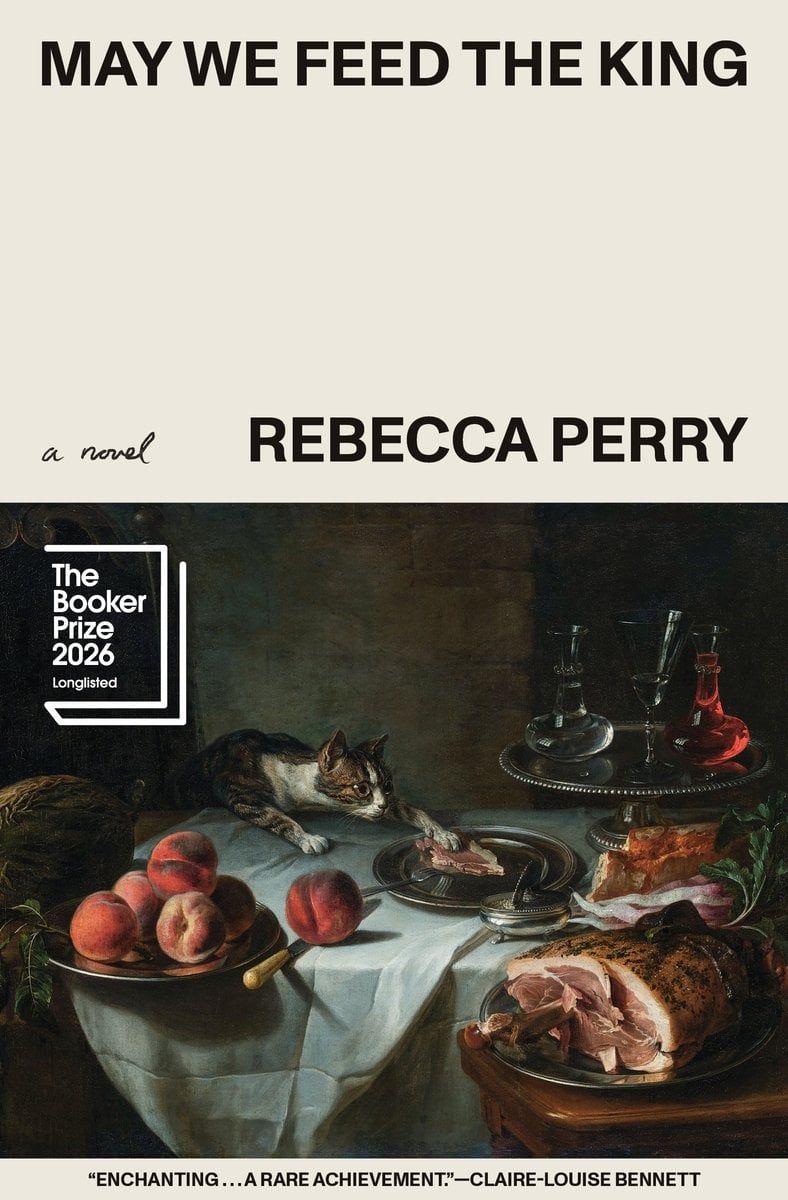
The long fallow patch of Booker Prize longlist novels ended last time with Black Bag, and we continue this time with another excellent choice by the judges in their selection of May We Feed The King by Rebecca Perry. Along with its selection to the longlist, the famous UK bookseller Waterstones had already declared it their winner of this year's prize for debut fiction. At the time of this posting, the book is still not even released in the US, but I heard such good things I simply was forced to get my hands on a UK copy.
The plot is told in three acts. As we open, we are introduced to a woman who designs historical room recreations. She has been commissioned to set up a number of rooms in a former palace, now turned historic home, in honor of its 750th anniversary. We follow her for a bit in act one as she begins her work at the location and does her best to figure out how to properly recreate the settings. She works with an archivist who gives her a large number of historical documents that help unlock how she wants to set up the displays.
Act two is the meat of the book: we follow the story of a noble who, through the death of his other two brothers, is forced to become King. It's a role he never expected he would have to fulfill, and very quickly he bristles at his lack of freedom. He spends a few years trying to settle into the position, but he often floats the idea of abdicating the throne and leaving the court to return to a more normal life. When he does bring up this idea in passing, it's quickly apparent that this would be a choice of action he wouldn't survive. In the end, he and his queen, and her lover, seemingly escape unharmed, though it's implied they are never seen alive again.
Act three is back to the opening of our main character's historic room recreations, where she gives a small talk in association with the archivist about what the nature of history is and how we are to interpret what we read.
The story as seen above is relatively straightforward, but the reason this novel has received so much critical praise is its prose and what it has to say about what history is and whose perspective we see things from. My interpretation of the second act is that we're meant to see what we're reading as what our protagonist is discovering about the historical King as she's doing her research using the documents provided by the archivist. Perry's descriptions, especially in act two, are often so evocative that they make the reader feel like a voyeur who is peering into one of the recreated historical rooms and seeing what was happening 750 years ago.
One anecdote at the end of act three was personally very affecting to me. Our protagonist tells a short story in the presentation about the importance of records. She mentions an Italian named Garnier Valletti, who is the reason we know about over 286 styles of historical apples. He created meticulously detailed wax sculptures of them that survived to the present day. Otherwise we'd have no idea that many of the varieties ever existed, and yet no one knows for sure why he decided to create them, and ironically enough, he made no records at all about how they tasted, something you'd think would be a key feature you'd want to record. But instead we are left with the uncomfortable fact that there are many things we simply will never know. During the exchange with the audience, the archivist gives his answer as to why Valletti recorded what he recorded, and it's a line that has stuck with me after finishing the book, "To make us confront, one day, what we have lost."
As it stands now, I'm basically halfway through the thirteen books of the longlist, and while I enjoyed the oddity and weirdness of Black Bag, I think May We Feed The King is going to be hard to top for me. I sincerely hope it makes it to the shortlist, and I would love it if it were the winner this year, but only time will tell for that. Until then, it will still remain one of my favorite books of the year.
- ← Previous
Black Bag