The Franchise
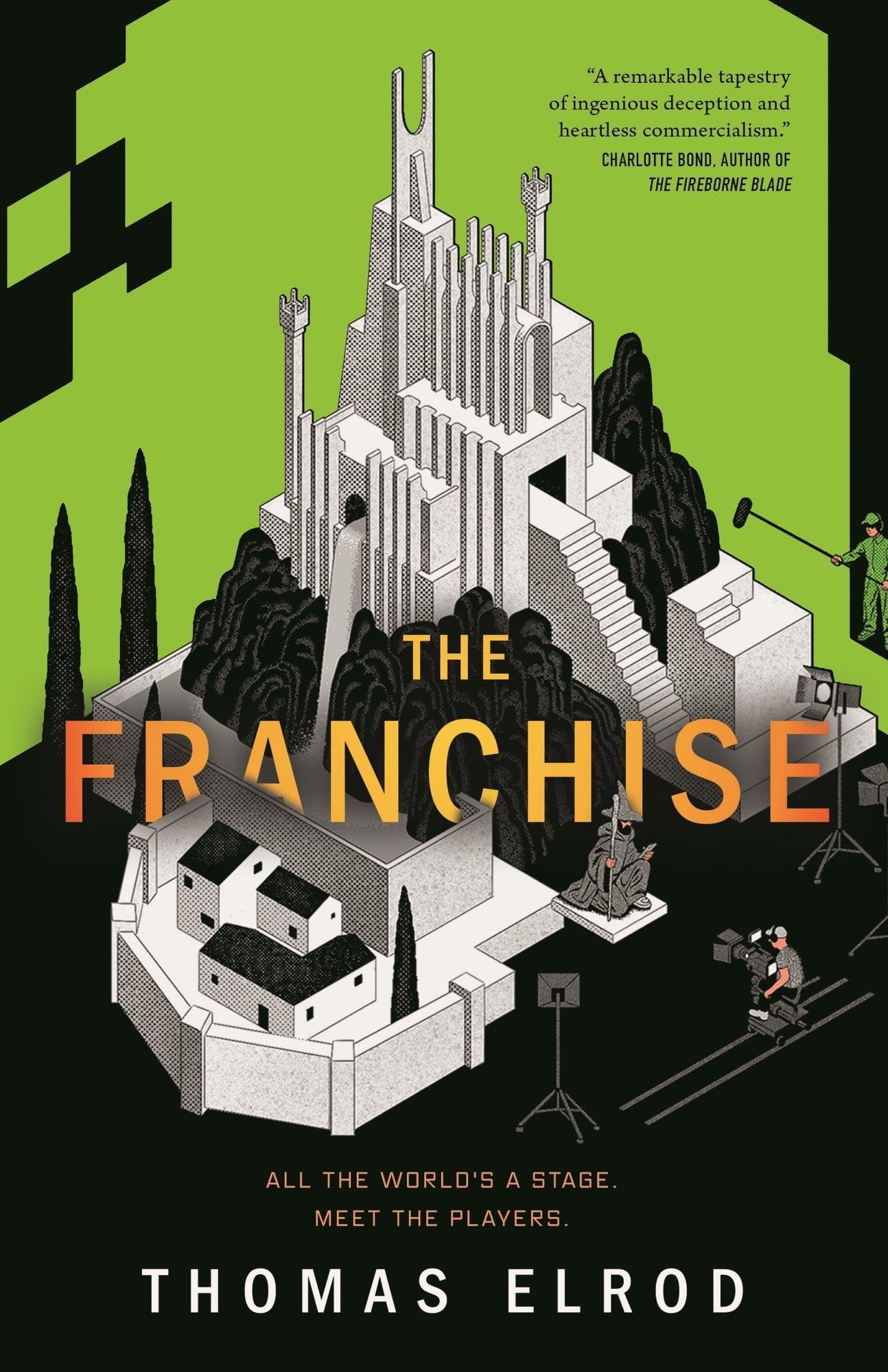
Every so often in the course reading I’ll find a book that seems like it was written exactly with me in mind. The Franchise by Thomas Elrod is exactly one of those books. Most of the promotional material I initially encountered describes it as a meeting between Game of Thrones and The Truman Show. As I really got into the story though, it became clear that the true comparison instead should have been Westworld which immediately led me to devour this book.
The story opens in the middle of the Cuban Missile Crisis, as an aspiring fantasy author named Jean-Danton Souard presents his first novel manuscript, a story called The Malicarn to a sci-fi/fantasy magazine publisher who is utterly convinced that the world as we know it will be ending within a day or two. Thinking that everything is meaningless, and based on the stubbornness of Souard, he offers him an exorbitant sum of money for the book on the spot. Everything that follows for the next 130 years or so is related to the critical and commercial success of that book.
The main thrust of the novel takes place a few decades in the future from present day. The Malicarn has produced decades of additional books and blockbuster movies most of them produced after the death of Souard who left the series incomplete, leaving it to his son and eventually the studio runner Jules to continue on with the legacy. Through a set of shady dealings, the studio is able to procure a sizable chunk of a Portuguese island, as well questionably legal US Military brain scanning/altering technology. They use this combo to create the setting of The Malicarn in the real world, populated with “actors” who have fictional personalities and backstories loaded into their brains. With the help of Glenn one of the “Reals”, they then proceed to film the interactions and events for next 20 or so years and use them as the on going movies and series for the fictional story empire.
Beyond the world building of the novel which I really love, it also has a lot to say about how in this age of rampant capitalism, popular creative stories and ideas aren’t allowed to end as long as they can still generate some profit for the owners. We see this today with the Lord of the Rings series, which for the most part are a completed whole, but because of their popularity, the rights holders feel compelled to create “new” shows or movies to satisfy the bottom line. The story also has echos to Game of Thrones in that Souard doesn’t finish the series himself. We in the real world are still left to wonder what will happen if G.R.R. Martin doesn’t finish the books himself. I think the novel’s handling of these ideas is very deft, and in a spoiler for the end of the novel, the show runner Jules does ultimately understand that what they’ve been doing has become derivative and uninspired. His solution to this problem however, does drive him to actual madness as he uses the brain scanning tech to try and recreate Souard and have Souard's personality layered over his own in an attempt to recapture the original spark of imagination. I will leave it to the reader to find out the outcome of that attempt.
If any of the setup of this book sounds like something you’d enjoy, then I can’t recommend it highly enough. It’s definitely my favorite novel I've read this year. And while I'd love a sequel set in this book's universe, I think the moral of the story would be to enjoy the story we did get, so instead I just look forward to whatever else Elrod writes in the future.
- ← Previous
How to Seal Your Own Fate - Next →
And Side by Side They Wander