Klara and the Sun

Cover

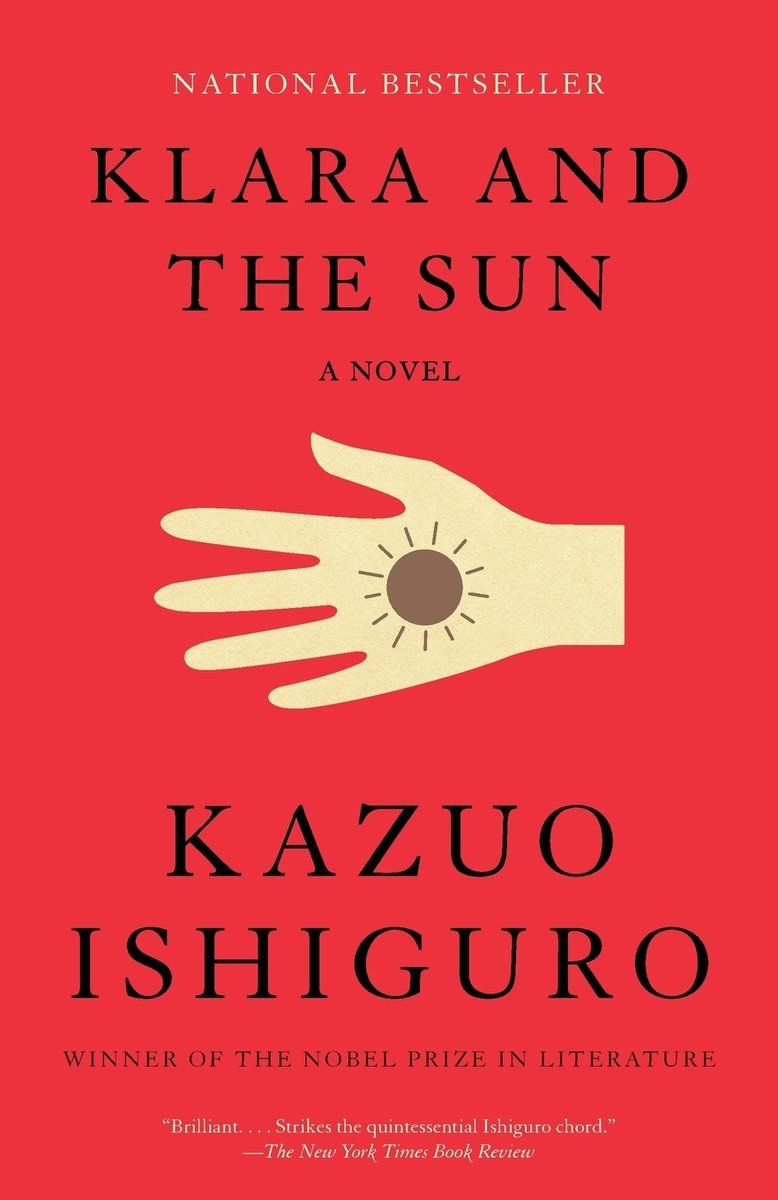
I was recently going through the list of Booker Prize nominated works from recent years past and I noticed one book that I had seen come up on lists before but never really looked into what it was about. That book was Klara and the Sun by Kazuo Ishiguro and after taking a look at the synopsis I realized that not only did it sound interesting, but it was more topical than ever.

In this book we follow the story of Klara, who is an AF, or Artificial Friend, a solar-powered robot whose main goal is to provide friendship and companionship to children. Through bits and pieces in the book we can infer that the story is taking place in a near-future dystopia where children are especially isolated and in general do all their learning remotely, only occasionally getting together in essentially play groups.

When we first meet Klara, she is learning about the world by watching the cityscape outside the large window of the AF storefront. From there she sees a number of things that her robotic brain interprets in ways that are interesting, and later important to the story, including a piece of construction equipment called a Cootings Machine and Beggar Man and his dog, who she believes are resurrected by the power of the Sun. It's also where she comes into contact with Josie, the 14-year-old main human protagonist. They have an interaction through the window one day, and eventually a few weeks later, Josie does make her promised return to the store, and after some convincing of Mother, they purchase Klara and bring her home.

Once home, we learn a little more background about the world we're in. There is some sort of elective procedure, genetic editing it sounds like, that parents can have done on their kids, which ultimately makes them much smarter and more capable than normal kids, leading them to be called "lifted". It does seem like it's not without its risks, though: Josie's sister Sal didn't survive the procedure, and Josie herself is often very weak and ill.

The rest of the story is Klara navigating her new life as Josie's AF and the family dynamic of Mother and Josie's neighbor Rick, who is "unlifted," which will leave him at a huge disadvantage in life despite his obvious aptitude at making and flying drones. As they try and navigate Josie's continual health issues, Klara puts her faith in the Sun to come up with a solution to the family's issues.

I really enjoyed this novel and it's fascinating to read a story of what we'd now call AI, but written in a time before LLMs were introduced to the world. Klara is portrayed as caring and compassionate, but often her understanding of the world about simple factual things like the Cootings construction machine is completely of her own design. It is, though, a little ironic that devotion to the Sun and her pact-making with it could actually be interpreted a little like how modern LLMs have their hallucinations. She saw the Beggar Man brought back to life in her way of understanding, and combining that with the fact her body is solar-powered, she confidently created a mechanism that she believed was real. And given the fact she never fully explained what she thought was happening to any human, she was never gently redirected to update her worldview. Which to be fair can be said of many humans these days as well.

Klara and the Sun didn't even make the shortlist of the Booker Prize the year it was nominated, but Ishiguro himself is a Nobel laureate in Literature, so I suppose there is no accounting for taste. I think it would have been a well-deserved winner though, and I highly recommend it for anyone looking for a more compassionate version of AI in their life.
This review contains affiliate links. If you buy through one I earn a small commission, at no extra cost to you.

The Greatest Possible Good

Cover

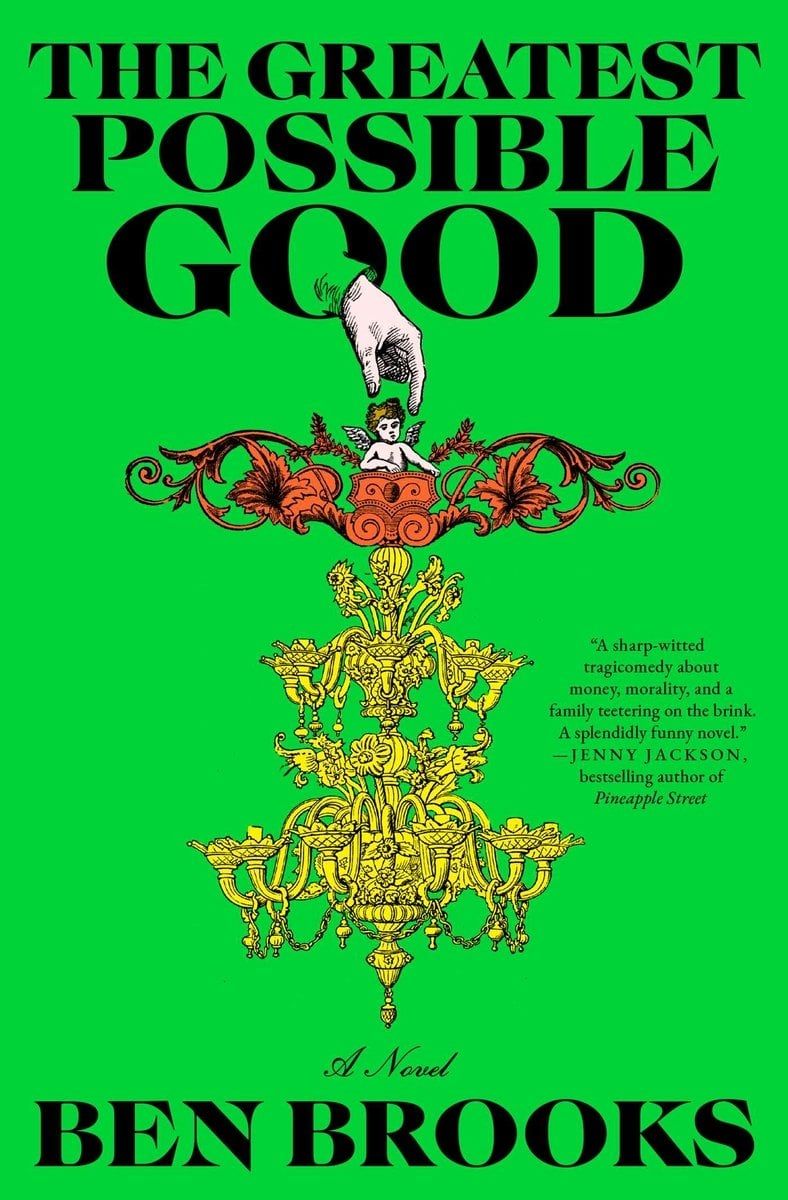
Despite the ever-increasing prevalence of BookTok and algorithmic recommendations on Amazon and Goodreads, I am constantly surprised how often the best way to find a new, interesting-sounding book is just to visit a new-to-me bookstore. A few weeks ago, on a trip to NYC, I stopped in at McNally Jackson Books and found a few such books, one of which I picked up was The Greatest Possible Good by Ben Brooks.

The premise of the book sounded similar to my favorite show ever, Arrested Development, where a wealthy family has a catastrophe and they have to pick up the pieces of their lives. In this story, we encounter a very well-off British family named the Candlewicks, led by the patriarch Arthur. His teenage daughter, Evangeline, has a very activist streak to her, leading very small acts of rebellion at her private school, while reading lots of progressive literature. The family's lives are upended one day when Arthur goes missing for the span of 72 hours. While on a random evening walk, he falls some 20 feet into an abandoned mineshaft, breaking his leg, and is trapped there until his eventual rescue.

After his release from the hospital and during his recovery, Arthur has a complete change of personality and he becomes enamored with the idea of Effective Altruism. EA, as it's often known, was a concept popularized in the last decade or so by some British philosophers, which in the early 2020s enamored a certain set of the San Francisco tech elite and may have indirectly caused a minor cryptocurrency bankruptcy or two. The main principle of the idea boils down to the notion that if you have any money that is in excess of what you truly need to live comfortably, it's your moral imperative to donate the rest to causes that can do the most good on a per-dollar basis. Arthur becomes obsessed with this idea, and without consulting his wife or the rest of his family, he takes all the money from selling the family’s timber business and donates it to a bunch of EA causes. This obviously causes a bit of friction between himself and his wife, which leads to them getting a divorce.

Things do not get better for the family after that point either. I had a feeling that the story wouldn't be a laugh a minute given that one of the blurbs on the back compared the novel favorably to The Bee Sting, which is a book I truly love but is incredibly depressing. This book doesn't get to those levels of sadness, but towards the end I did eventually find it to be incredibly dour. I also didn't have positive feelings towards any of the family members, so I had a hard time rooting for any of them to break themselves out of their destructive loops.

In the end, I don't think I'd recommend The Greatest Possible Good unless someone really enjoyed fiction that mentioned EA in it. If you want a comedy about this kind of thing, I always suggest Arrested Development or Schitt's Creek, and if you want the actual depressing version, then definitely check out The Bee Sting by Paul Murray, who is an incredible author to check out regardless.

This review contains affiliate links. If you buy through one I earn a small commission, at no extra cost to you.

Taiwan Travelogue

Cover

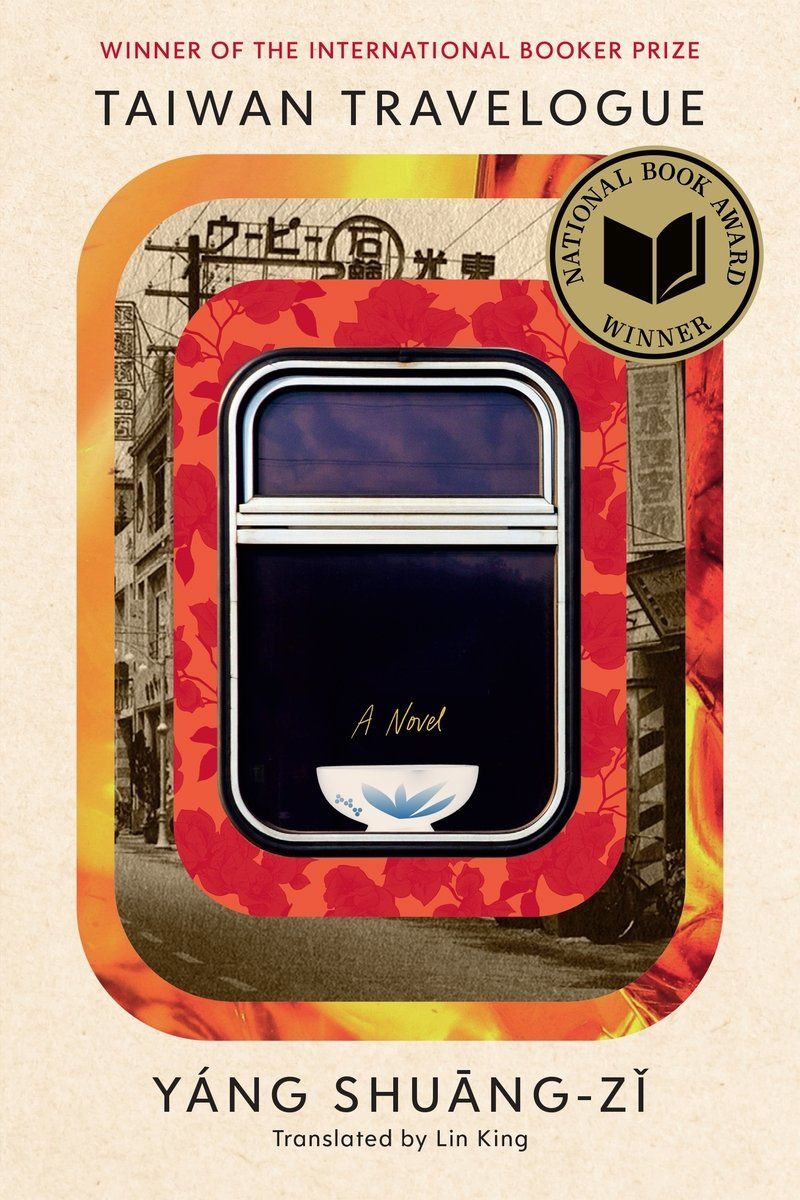
As we wait with bated breath for the announcement of the Booker Prize shortlist, happening on Sept 22nd if anyone happens to be in London then. And due to the fact that the only longlist nominees I'm still waiting to read aren't out in the US quite yet, I decided to take a look at this year's winner of the soon-to-be-renamed International Booker Prize, which is Taiwan Travelogue by Yang Shuang-zi and translated into English by Lin King.

The novel is presented as a novel within a novel, which with the English translation actually goes even one level deeper than that. The conceit in the book is that it's a rediscovered series of travel articles by a Japanese novelist in the late 1930s that had been translated into Mandarin Chinese in the modern day. We follow the visit of Japanese author Aoyama Chizuko to the island of Taiwan for a year-long visit to understand the culture of the island and to also occasionally present about her previous novel.

Her trip comes around the start of the Second Sino-Japanese War, and her visit is in fact sponsored by the colonial authorities with the tacit understanding that some of her articles would be suitable for propaganda purposes. Despite her Japanese heritage, Aoyama does refuse to participate in that kind of writing. Instead, once she arrives, she is paired with a local interpreter named O Chizuru, whom she eventually nicknames "Chi-chan," and she proceeds to try and satiate her never-ending appetite, which she often says is like a monster inside of her.

It's a common trope that a book is always better than any TV or movie adaptation of it, but I'm unsure if that would be the case with this book. The story is a true love letter to Taiwanese food and culture, with even all of the chapters being named after different dishes. Large swaths of the book are just voluminous descriptions of individual dishes, snacks and meals that the two main characters go through eating. Given my lack of familiarity with food from that part of the world, I would love to see a TV version just so I could understand what food they're so often talking about, most of which sounded pretty great, though, as is often the case, too many vegetables were mentioned for my liking.

The rest of the plot outside of the copious depictions of food is also interesting, but again my lack of familiarity with the geopolitics of the time means that some of the more subtle points of the story probably went over my head. There is an obvious tension from time to time due to the fact that Aoyama is there at the pleasure of the colonial government and, like it or not, she is an embodiment of the will of the Japanese government in a time of war. She does make every effort to learn as much as she can about the native people of the island, predominantly through the speciality dishes.

If I have more time before my next batch of reads, I might go back and try some of the other shortlisted International Booker Prize entries for this year. Even without reading the other translated works, I will say this compares more favorably than the majority of the non International longlist nominees I've read so far, so I would imagine this is a worthy winner. Just make sure you can schedule your reading time of this book to coincide with your next meal as closely as possible or you might regret it.

This review contains affiliate links. If you buy through one I earn a small commission, at no extra cost to you.